- TAG IT
- SCAN IT
- TRACK IT
Blog Article
A detailed comparison for warehouse supervisors, inventory coordinators, and retail floor managers evaluating wireless 2D scanners, covering scan range, battery life, durability, and total deployment cost.
If you’re an operations manager or warehouse supervisor evaluating wireless 2D barcode scanners then this comparison is built for you.
Note on paired SKUs: Wasp WWS560 (standard tier) and WWS652 (heavy-use, longer battery) | Zebra DS2278 (standard) and DS4678 (adds multi-barcode capture and longer battery) | Honeywell Voyager 1472g (standard) and Xenon XP 1952G (longer range, superior damaged-barcode reading). All six are covered below.
Read range is the most practical spec for warehouse and retail scanning. Here it matters that the Wasp WWS560 outranges both Zebra options at 18 inches vs. 14 inches for the DS2278 and DS4678. On a pick line or retail floor, four inches of additional range changes ergonomics and scan angle flexibility.
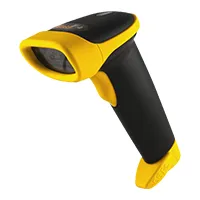 Wasp WWS560
|
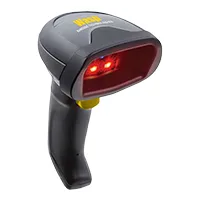 Wasp WWS652
|
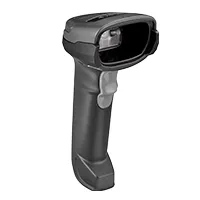 Zebra DS2278
|
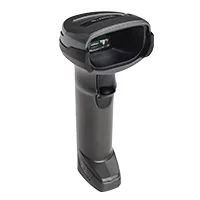 Zebra DS4678
|
 Honeywell Voyager 1472g
|
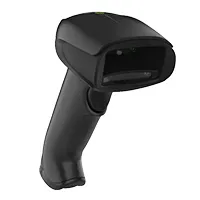 Honeywell Xenon XP 1952G
| |
|---|---|---|---|---|---|---|
| Scan Type | 1D & 2D | 1D, 2D & PDF | 1D & 2D | 1D, 2D & PDF | 1D & 2D | 1D, 2D & PDF |
| Read Range | 18 in (45 cm) | 16 in (40 cm) | 14 in (35 cm) | 14 in (35 cm) | 17 in (43 cm) | 20 in (51 cm) |
| Multi-Barcode |  | | |  | | |
| Multi-Barcode | 5 ft | 6ft | 5 ft | 6 ft | 5 ft | 6 ft |
| Battery (scans) | Standard | ~40,000 | Standard | ~75,000 | Standard | ~50,000 |
| Weight | 6.8 oz | 7.2 oz | 7.2 oz | 8.0 oz | 7.5 oz | 7.8 oz |
| Warranty | 2-year | 2-year | 3-year | 3-year | 3-year | 3-year |
| Damaged Barcode | Standard | Standard | Standard | Standard | Superior | Superior |
| Software | Wasp Asset / Wasp Inventory | Wasp Asset / Wasp Inventory | Zebra 123Scan | Zebra OEM Config | Honeywell EZConfig | Honeywell EZConfig |
| Single-Vendor HW+SW | Yes | Yes | No | No | No | No |
The DS4678’s 75,000-scan battery leads the group for high-volume environments. The Xenon XP 1952G (50,000) and WWS652 (40,000) are both strong for full-shift warehouse use. All models include a charging cradle that doubles as the USB interface to the host system.
The Zebra DS4678 is the only scanner in this comparison with multi-barcode capture which means pressing the trigger once reads multiple barcodes visible in the field of view simultaneously. For cycle counting on a shelf where multiple items are visible at once, this eliminates individual scanning per item. No other scanner in this group offers this at this tier.
The Wasp WWS560 and WWS652 connect natively to Wasp Inventory and Wasp Asset. Scan into Wasp software and records update in real time with no middleware, no separate integration project. One vendor covers scanner, software, labels, and printers.
Not sure which scanner is right for you? Talk to a hardware specialist »
Wasp WCS3950
Best for: Small businesses using Wasp software and close-range desktop scanning
18-inch range, native Wasp software connection, single vendor. For teams using Wasp Inventory or Wasp Asset, the WWS560 is the natural wireless 2D choice.
Wasp WWS652
Best for: Higher-volume warehouse and distribution teams in the Wasp ecosystem
40,000-scan battery, omnidirectional scanning, 6-foot drop rating, lightest 6-foot-rated scanner in this comparison. Integrates natively with Wasp software.
Zebra DS2278
Best for: Existing Zebra POS and retail environments
Fits into Zebra infrastructure. Note the 14-inch scan range which is shorter than both Wasp options and the Voyager 1472g.
Zebra DS4678
Best for: High-volume environments needing multi-barcode capture
75,000-scan battery and multi-barcode capture are unique in this group. Best for IT-managed high-volume distribution deployments where those capabilities translate to measurable ROI.
Honeywell Voyager 1472g
Best for: Healthcare, retail, and variable label quality environments
Superior damaged-barcode reading. 17-inch range. Strong Honeywell ecosystem support for healthcare and logistics.
Honeywell Xenon XP 1952G
Best for: Demanding retail, logistics, and high-usage industrial environments
20-inch class-leading scan range, superior damaged-barcode performance, 6-foot drop rating. Premium option for teams willing to pay for best-in-class scanning performance.
The Xenon XP 1952G and DS4678 lead their respective tiers on specs. For operations teams who want strong wireless 2D performance and native tracking software integration in one vendor relationship, the Wasp WWS560 and WWS652 offer real advantages, including a scan range lead over Zebra, that most spec sheet comparisons miss.
Interested in the WWS560 or the WWS652? Request a Quote »
A 1D scanner reads traditional linear barcodes. A 2D scanner reads both 1D barcodes and 2D codes like QR codes, Data Matrix, and PDF417. If your inventory system, asset tags, or shipping labels use QR codes, you need a 2D scanner.
Wireless scanners use Bluetooth to communicate with a cradle (a small base station), which connects to your computer via USB. The cradle charges the scanner when docked and provides the wired interface. Most setups take minutes to configure.
Multi-barcode capture means the scanner reads several barcodes visible in its field of view with a single trigger press. For cycle counting on a shelf where multiple items are visible at once, this eliminates the need to scan each individually which is a a genuine workflow accelerator. No other scanner in this comparison offers this capability.
Yes. The Wasp WWS560 and WWS652 connect directly with Wasp Asset and Wasp Inventory. The Zebra and Honeywell models also work with Wasp software via keyboard input through the cradle, though they’re not sold as part of the Wasp ecosystem.
The Wasp WWS560 and WWS652 can read barcodes displayed on smartphone screens which is useful for electronic ticketing, loyalty programs, and digital asset tags. The DS4678 and Xenon XP 1952G also support screen barcode reading. Check your specific SKU for confirmation.
All six scanners support at least 30 feet of line-of-sight Bluetooth range to the cradle. Walls, metal shelving, and RF interference reduce effective range in practice. For standard retail and small warehouse environments, 15–30 feet of reliable range covers most workflows.
Specifications sourced from Wasp Barcode Technologies, Zebra Technologies, and Honeywell product documentation. All product names are trademarks of their respective owners. waspbarcode.com | 1-866-547-9277